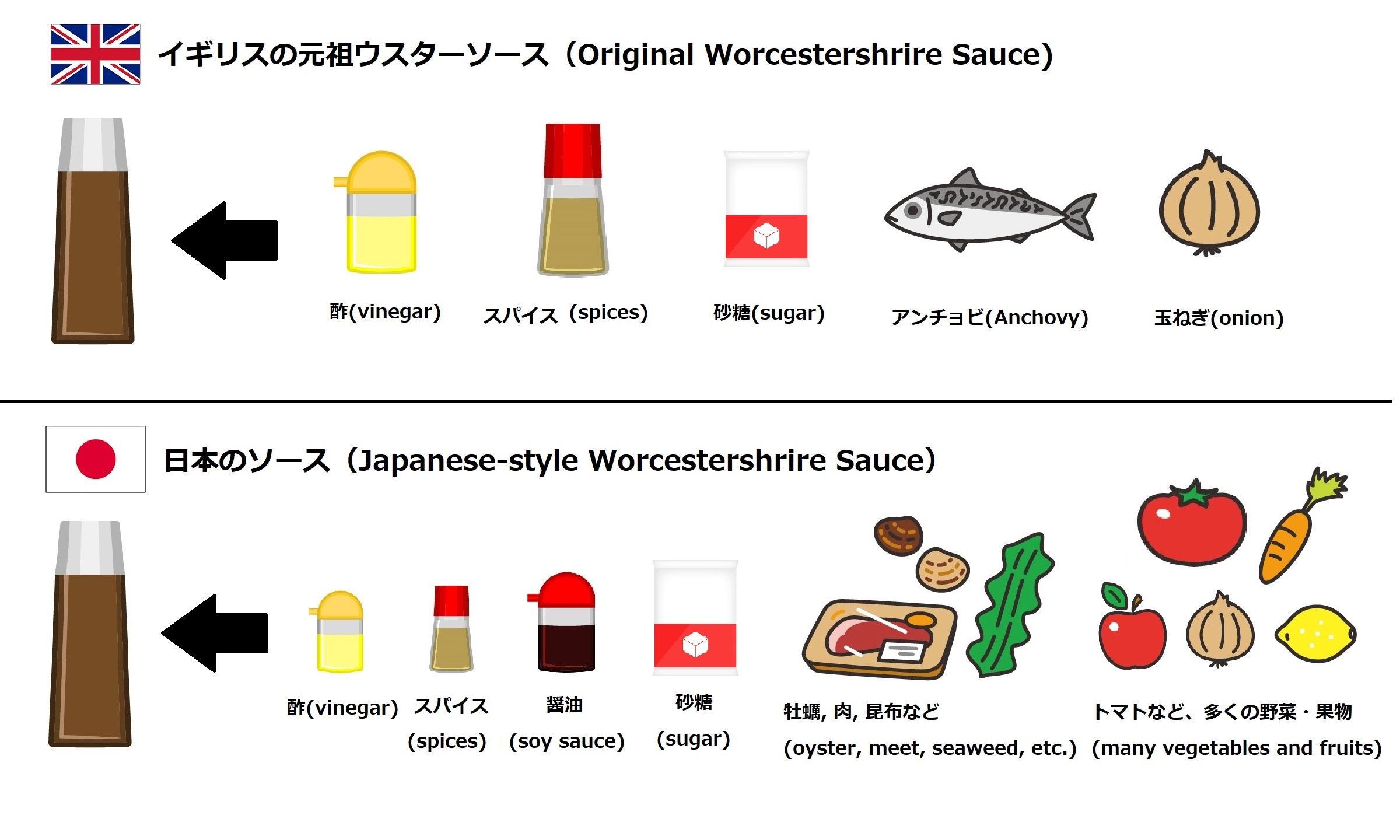
In Japanese, “ソース(sauce)” means Japanese-style worcestershrire sauce. It is often used for “Tonkatsu(Japanese pork cutlet)” and “Okonomiyaki(Japanese pancake)”.
It is much different from English worcestershrire sauce. It is sweeter, thicker and richer.
This column shows “the ingredients of the sauce”, “the characteristics of the sauces” and “why worcestershrire sauce has a sweet taste in Japan”.
The ingredients of Japanese-style worcestershrire sauce
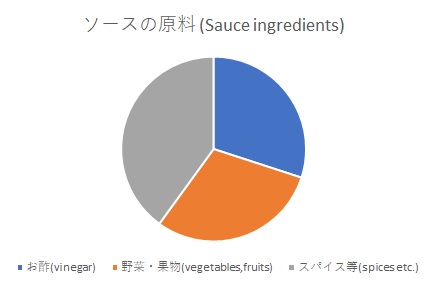
There are some kind of Japanese-style worcetesrshrire sauces. All the sauces are made from vinegar, vegetables & fruits, spices, and so on.
The percentage of vinegar is approximately 30%. However, the sauce is mild sour because vegetables and fruits add sweetness and rich flavor.
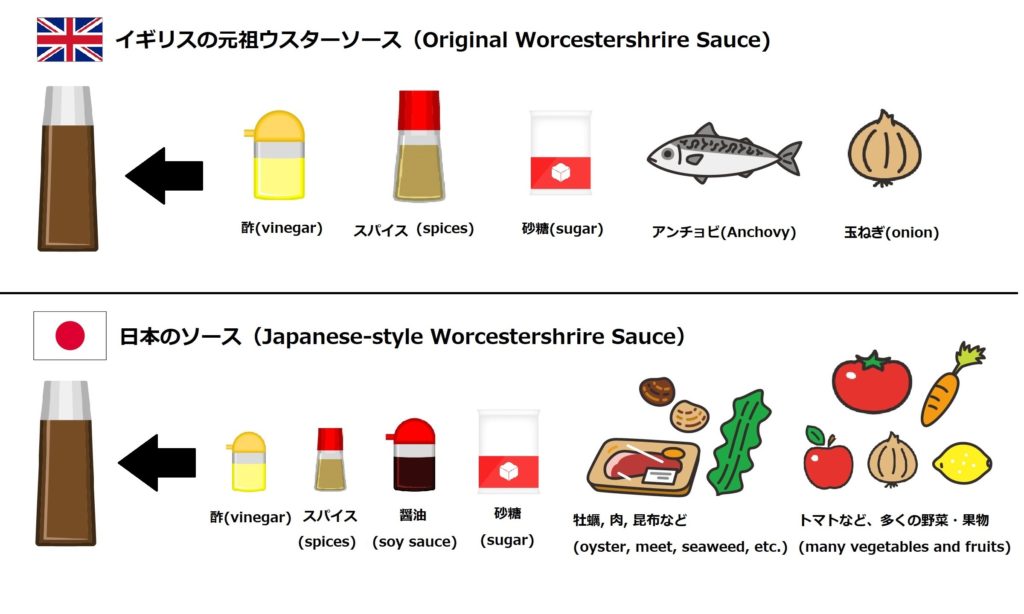
For the difference between English original worcestershrire sauce and Japanese-style one, see the illustration below. Japanese-style sauce is less sour, less spicy but richer and sweeter.
The characteristics of each Japanese worcestershrire sauce
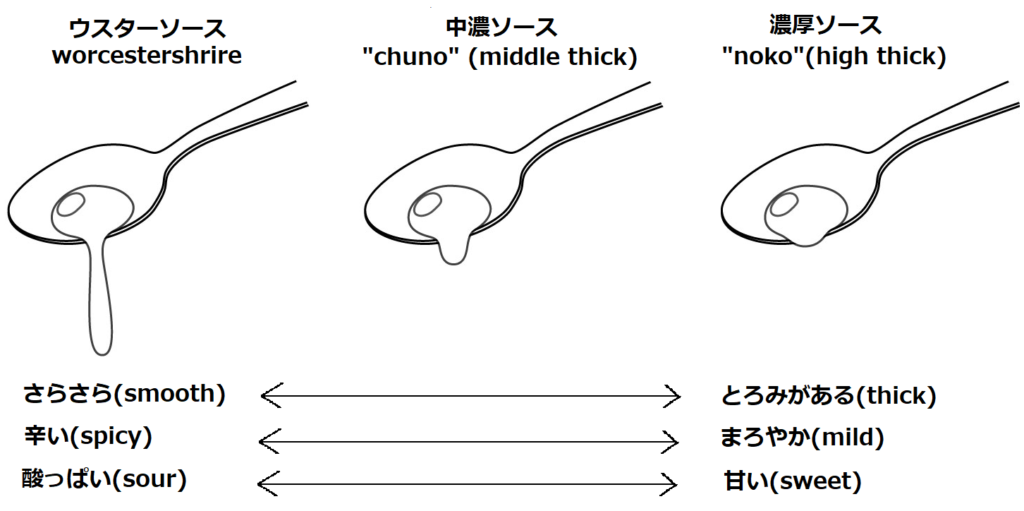
Japanese-style worcestershrire sauce roughly divided into 3 types: worcestershrire sauce, “chuno” sauce(middle-thickened sauce), and “noko” sauce(high-thickened sauce). Tonkatsu sauce and Okonomiyaki sauce are a kind of “noko” sauce.
Each sauce has the following features.
worcestershrire sauce : less vegetables & fruit, smooth, vinegary, and spicy.
“chuno” sauce :less vinegary, more vegetables & fruit, thicker and sweeter.
“noko” sauce :more vegetables & fruit, thicker and sweeter than “chuno” sauce.
The difference of Tonkatsu and Okonomiyaki sauce
Both Tonkatsu sauce and Okonomiyaki sauce are a kind of “noko” sauce. However, there some difference between the two sauces. Let’s see the ingredients of each sauce made by Otafuku which is a major sauce maker.
Vegetables and Fruits
Tonkatsu sauce :tomato, apple, onion, etc.
Okonimiyaki sauce :tomato, date, onion, etc.
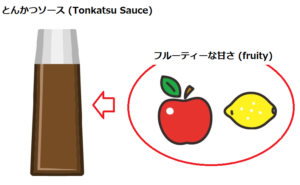
Both sauces are mainly made from tomato, onion, and fruits. Tonkatsu sauce contains apple so it has a fruity taste.
Flavor components
Tonkatsu sauce :salt > soy sauce > amino acids liquid > oyster extract
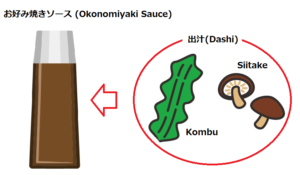
Okonimiyaki sauce :amino acids liquid > salt > soy sauce > oyster extract >meat extract >kombu (seaweed) > shiitake mushroom
Okonimiyaki sauce contains many flavor components. Especially, kombu and shiitake mushroom are important because they are Dashi (Japanese stock) ingredients.
What is Yakisoba sauce
Yakisoba sauce is used for Yakisoba, Japanese fried noodles.
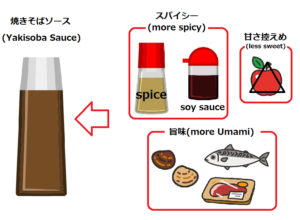
There are many kinds of Yakisoba sauces, thick one and smooth one. An overall trend, they have the following characteristics.
・less sweetness (light sugar and fruits)
・more “Umami”(rich flavor) consists of many extract of meat, fish, and shellfish
・spicy aroma by spices and soy sauce
Comparison chart of sauces
| 甘み(sweet) | とろみ(thick) | 旨味(umami) | 酸味(sour) | 辛み(spicy) | |
|---|---|---|---|---|---|
| ウスターソース (Worcetershrire Sauce) | ◎ | ◎ | |||
| 中濃ソース (medium thick sauce) | 〇 | 〇 | 〇 | 〇 | 〇 |
| とんかつソース (Tonkatsu sauce) | ◎ | ◎ | 〇 | 〇 | |
| お好みソース (Okonomi sauce) | ◎ | ◎ | ◎ | ||
| 焼きそばソース (Yakisoba sauce) | 〇 | 〇 | ◎ | ◎ |
Additional information : Why Japanese sauce is sweet?
Japanese-style worcestershire sauce is much sweeter than English-style one. Why?
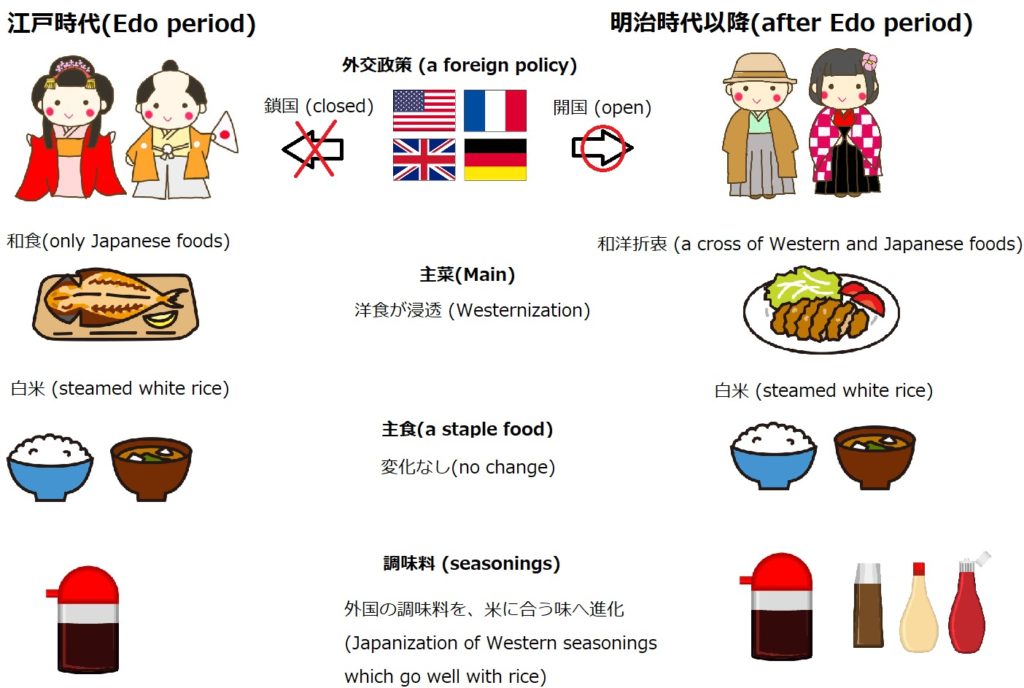
In the Meiji period (1868-1912), due to the end of Japan’s closed-door isolation policy, English-style worcestershire sauce came to Japan with European cooking. However, worcestershire sauce was used for only seasoning as same as in Europe.
From the late Meiji period to the Taisho period, Japanese-style fried foods, such as “Korokke” and “Tonkatsu” became popular in Japan. Then, people needed less spicy and less sour sauce to pour over foods, just like soy sauce which seasoning Japanese love from before.
Many makers competed in developing new original worcestershire sauce. As a result, for Japanese who loves the taste which goes well with rice, the sauce became sweeter and milder.
However, the sauce production dramatically decreased during World War II because of food shortage, especially sugar shortage.
After World War II, with resolving food shortage, people really wanted sweet foods. As a result, “noko” sauce was born, which is sweet, thick, not spicy, and not sour.
After that, “chuno” sauce was born, which is in between “noko” sauce and Japanese-worcestershire sauce. The sauce became popular in eastern Japan.
On the other hand, in western Japan, the sauce which is a little sour has been popular since before World War II. Then, people use two type of sauce, one is Japanese-worcestershire sauce which is sour and spicy, the other one is sweet “noko” sauce.
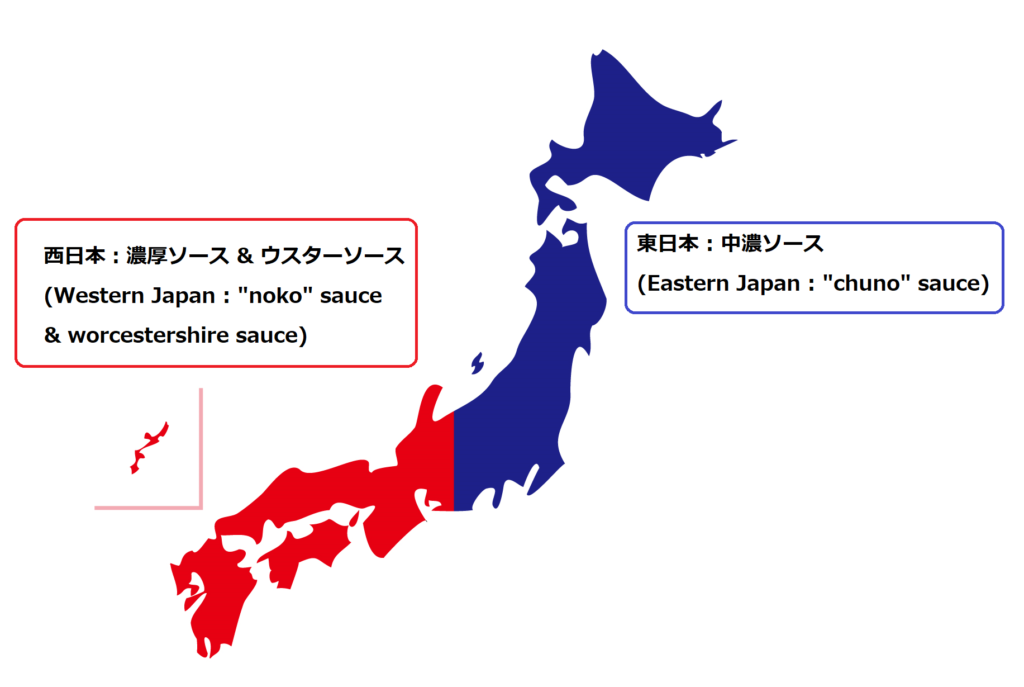
(Reference : Agriculture & Livestock Industries Corporation ” ソースについて” (“About the sauce”))

コメント